
The First Hike Since 2023
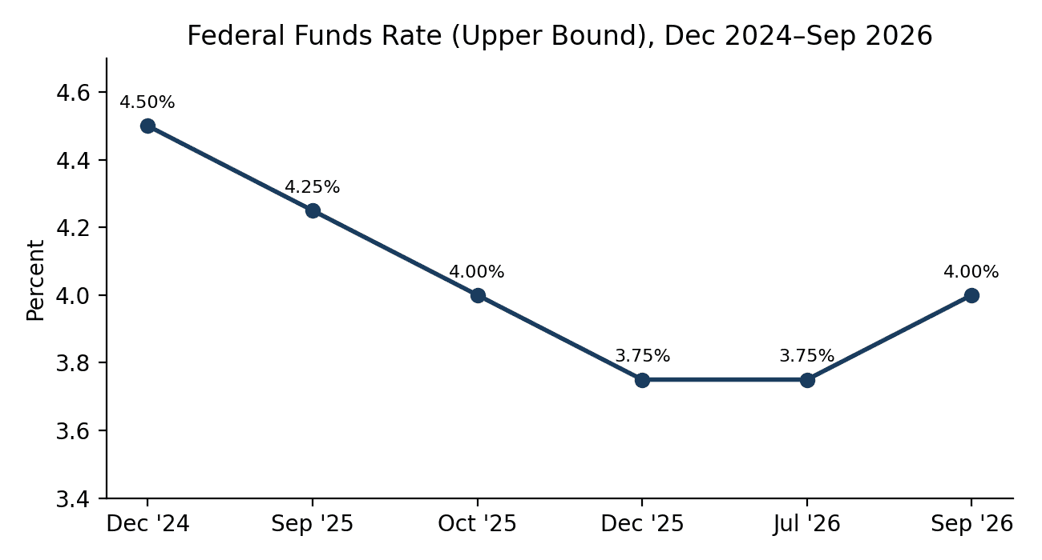
On Wednesday, Sept. 16, 2026, the Federal Reserve raised the federal funds rate a quarter point, to a target range of 3.75% to 4.00%. It is a small move by the numbers, but a large one by direction: it is the first hike since 2023, and it comes only nine months after the Fed had been cutting, not raising, three straight times through the end of 2025. The official reason was inflation that refused to cooperate, particularly energy prices pushed higher by the ongoing conflict involving Iran, along with lingering cost pressure from tariffs. The unofficial reason, if you read between the lines of the last two weeks, is that the bond market basically forced the Fed's hand before the Fed forced its own.
That is not editorializing. JPMorgan economist Michael Feroli described the run-up to this meeting as one marked by rising bond yields and energy prices, plus inflation readings firm enough to make a hike more likely than not. Goldman Sachs, which had called a September increase "very unlikely" as recently as last month, reversed itself days before the vote and now frames the move less as a response to the underlying inflation picture and more as the Fed following where markets had already gone. When two banks that disagree on almost everything else both walk back a "no hike" call inside of two weeks, that is not noise. That is a real shift in the credit environment, and it didn't wait for the actual FOMC vote to start mattering.
Prime Rate Pressure
The prime rate, the number that actually prices variable-rate business lines of credit and a big share of SBA 7(a) loans, had been sitting at 6.75% since the Fed's last cut in December. It tracks the fed funds rate directly, and it is about to move with it. That 25 basis points doesn't sound like much until you remember who is actually carrying variable-rate debt: not the well-capitalized company that termed out its financing two years ago, but the mid-size distributor or staffing firm running a revolving line to smooth out the gap between when it pays its own vendors and when its customers get around to paying it. That gap is the entire business model for a lot of companies in manufacturing, distribution, and logistics, and the credit line covering it just got more expensive at the exact moment those same customers are facing their own cost pressure from tariffs and energy prices.
The Receivables Squeeze
A rate hike driven by cost-push inflation, oil and tariffs rather than an overheating economy, does not do a business's customers any favors either. Their input costs are rising the same way yours are. So you have got two things happening on the same balance sheet at once: the cost of bridging a receivables gap goes up, and the odds that a customer stretches a 30-day invoice to 45 or 60 days also go up, because they're managing the identical squeeze. Businesses that lean on that credit line specifically because customers pay slowly are now paying more to solve a problem that is about to get slightly worse. Neither side of that trade is under your control, and both sides just moved against you in the same week.
What we watch for on accounts we manage is exactly this kind of quiet drift, not the customer who calls to say they're in trouble, but the one who keeps paying, just a little later each cycle, until the aging report shows a 45-day account that's actually been slipping for five months and nobody flagged it because the invoice was technically "still in process." An account that's drifted from paying at 32 days to 41 days over two quarters is not a rounding error. It is a customer whose own cost of capital just went up, and who is quietly using your invoice as free financing while they figure out what to do about it.
None of this requires panic, and it doesn't require assuming every slow payer is in real trouble. Most are not. But it is a reasonable moment to run the numbers on your own receivables the same way a bank just ran the numbers on its rate forecast: look at how your days sales outstanding has moved over the last two quarters, not just where it sits today, and treat a widening trend as a signal worth acting on before it is a 90-day placement decision instead of a phone call. The businesses that come out ahead of a rate cycle like this one are not the ones with the least exposure. They're the ones who noticed the drift three months before their competitors did.
Sources
- Fed Rate Decision September 2026: Benchmark Hiked to 3.75%-4.00% — https://www.raisin.com/en-us/news/fed-rate-decision-policy-breakdown-september-2026/
- Fed rate decision September 2026: Rates rise to 3.75%-4% — https://www.cnbc.com/2026/09/16/fed-rate-decision-september-2026.html
- Goldman Sachs, JPMorgan expect Fed rate hike this week — https://qz.com/goldman-sachs-jpmorgan-fed-rate-hike-september-091426
- Major US banks raise prime rate after first Fed rate hike since 2023 — https://www.933thedrive.com/2026/09/16/keycorp-raises-prime-rate-after-fed-decision/
- Current SBA Loan Interest Rates September 2026 — https://www.lendio.com/blog/sba-loan-interest-rates
- Federal Funds Rate History: 1954 to April 2026 — https://www.finder.com/banking/fed-funds-rate
Read next
Business Bankruptcies Are Accelerating in 2026Business bankruptcy filings are accelerating, especially among smaller companies. The first warning often appears in payment behavior long before it reaches a court docket.Have an account ready to place?
We work on contingency. No upfront cost.
JSD has been handling commercial collections since 1997. Every placement is reviewed by our team. Most clients are up and running the same day.