Some placements arrive with everything a collector wants except a person to contact. The invoices are clean, with a signed purchase order behind every one. The debtor's name ends in “LLC,” the only address on file belongs to a registered agent in Wilmington, and the one contact the client remembers is a purchasing manager who stopped answering in the spring.
The client usually expects the owner's name to be a quick lookup away, listed somewhere in the state's records. For a Delaware LLC, though, the public record often ends at the registered agent, which leaves a creditor wondering where to look next and whether any of this work could have happened sooner.
Delaware's public records usually won't name the owners, but filings in the state where the company operates and the creditor's own account documents may identify someone who can resolve the debt. Whether that person is personally liable is a separate question.
Why the Record Stops at the Registered Agent
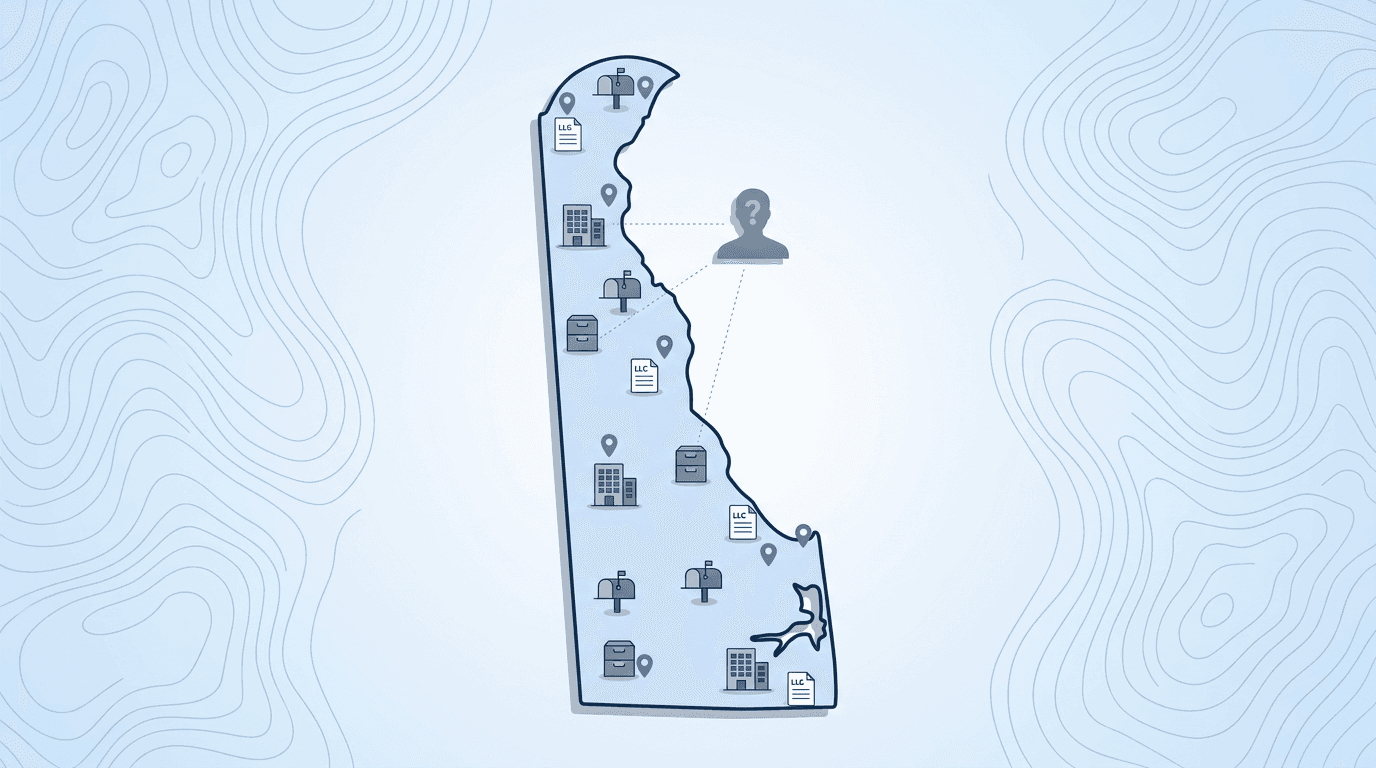
When an LLC is formed in Delaware, the certificate of formation needs only the company's name and the name and address of its registered agent. Members and managers can be listed, but nothing requires it. After formation, Delaware LLCs file no annual report naming anyone and simply pay a flat $300 annual tax, so a search of the Division of Corporations can show the company's formation details and which registered agent accepts legal papers for it. For most creditors, the public trail ends there.
The Corporate Transparency Act once required most U.S. companies to report their beneficial owners to FinCEN, the Treasury's financial crimes bureau, but that database was never open to trade creditors. FinCEN's final rule in August 2026 made permanent an exemption for U.S.-formed companies that had been in place since March 2025, and FinCEN has said it will delete the ownership data domestic companies had already filed.
Companies formed in Wyoming or Nevada raise the same problem, since both states also let LLC owners stay off the public record. In each case, the formation record is no substitute for asking who owns and runs the customer before extending credit.
Tracing an LLC That Already Owes You
Once an invoice is late, the practical question shifts from who owns the company to what can still be found. Delaware's free entity search is a sensible first stop. It confirms the company's formation details and identifies its registered agent. Checking the company's current status takes a separate $10 status search, though the result isn't an official certificate of good standing. A lapse, often from an unpaid annual tax, is worth noting, but by itself it doesn't mean the business is insolvent.
An LLC formed in Delaware that runs a warehouse or office in another state will often have to register there as a foreign LLC, depending on the activity and that state's rules, and that second registration can tell you more than the first. The registered agent is designated to receive service of process for the company, while the annual report filed in the state where the trucks are parked may name someone who runs it.
Florida's annual reports, for instance, must name at least one person with authority to manage the company. For a debtor like the one in the opening, that could point to a manager with more authority than the purchasing contact who went quiet. The name may belong to a manager rather than an owner, and it won't show the full ownership chain. For collection purposes it's often enough, because the goal is a person with authority to settle the balance.
If the operating-state filings come up thin, court and licensing records can sometimes fill in names. Earlier lawsuits against the debtor may include filings signed by someone at the company, and contractor licenses or local permits often list a qualifying individual. UCC filings show which lenders or other secured parties have claimed the debtor's collateral, sometimes specific equipment and sometimes all of its business assets. Those filings don't establish what the company owns today, but they can reveal potential claims against the debtor's assets and secured parties worth looking into, which may affect what an unsecured creditor can expect to recover.
The original credit application and the signed purchase orders in the creditor's own file name people who acted for the company. Signing a purchase order doesn't necessarily mean someone can negotiate or settle a debt, but those names are a reasonable place to start asking who can. On a commercial account, that may matter more than mapping the full ownership structure, because one decision-maker who can be shown the invoice and asked to resolve it is often what moves the balance.
Every month the account sits, contacts change jobs and assets get sold or pledged to other lenders, so the search tends to get harder the longer it waits. Our skip tracing process is built for this kind of search, and it moves faster when the placement includes every name and signature the client has collected. If those searches stall, legal proceedings can compel information the company won't volunteer. With a judgment in hand, a creditor can use post-judgment discovery to make the company answer questions under oath about who owns it and where its assets went. That step runs through an attorney, and we bring in one of our outside attorneys when an account calls for it.
What a Name Gets You
Once you have a name, the debt still belongs to the LLC. What changes is who you can talk to about it. Ownership alone doesn't establish authority either, since some members are passive investors with no role in running the business. If the owner does manage the company, the more useful way to see them is as a decision-maker for the debtor, someone who may be able to authorize payment or point you toward the company's assets.
In narrower circumstances, a creditor may have remedies that reach beyond the LLC's remaining assets. Transfers of company property to owners or other recipients can sometimes be challenged under voidable-transfer law, and in exceptional cases a court may disregard the LLC's separate existence. Recovering a transfer is different from holding the owner liable for the original debt, and neither remedy follows from ownership alone. Both depend on the facts and the law of the state involved and run through an attorney, which makes them hard to plan a credit decision around.
A guarantee is the most direct route to an owner's personal liability that a creditor can arrange in advance. A name gives you someone to call. A properly drafted guarantee gives you someone who owes you.
Next Time, Ask Before You Ship
Before the first order ships, asking who owns the customer is a routine part of the credit application, and how far to take the question depends on the customer.
With a small or closely held LLC, it can make sense to ask for every member and manager by name. If a member turns out to be another company, keep asking until the answer is a person, since a chain of holding companies can keep an LLC anonymous on paper.
With larger or private-equity-owned customers, tracing the full chain is rarely practical. The more useful names are usually the officers authorized to sign for the company and anyone willing to guarantee the account. Our post on the warning signs to check before extending credit covers the rest of that vetting, and ownership is an easy piece to skip.
If the guarantee arrives with the rest of the onboarding paperwork, it tends to look like one more form to sign. Wait until the account is 60 days past due and the same request starts to look like a threat, which is usually how it gets treated.
An owner who signs as “John Smith, President” invites a dispute over whether the guarantee binds them personally or only the company. Language stating that the individual accepts liability separately, with its own personal signature line, heads off that argument. A guarantee is also only as collectible as the person behind it, and counsel should review the document before anyone relies on it.
Large customers often refuse personal guarantees, and pressing the point can cost the account. A parent-company guarantee or a security interest in specific collateral can stand in, and where neither is available, the credit limit becomes the protection, which suggests setting it at an amount you could afford to lose.
The Question Belongs at the Start
Files like the placement in the opening often trace back to the day terms were approved, when nobody asked who stood behind the company, and Delaware's public records won't do that vetting for you. One answered question on that credit application would have put a name in the file before the purchasing manager stopped answering, and the search would have started with someone to call.
The question worth asking at onboarding, then, is who owns the customer and who can authorize payment, with the answers recorded on the credit application. If an account against an LLC like that is already slipping, place it while the old contacts are still reachable and there's a reasonable chance of recovery. Our Delaware collection agency page explains how we approach accounts involving Delaware entities.
Read next
The Commercial Debt Recovery Process ExplainedHow commercial debt recovery actually works, from the first missed payment through agency placement, negotiation, and legal escalation. What every creditor should know before the sixty-day mark.Have an account ready to place?
We work on contingency. No upfront cost.
JSD has been handling commercial collections since 1997. Every placement is reviewed by our team. Most clients are up and running the same day.